Sun-Thu 08:00AM-05:00PM

Keratoconus Education

What is Keratoconus (KC)?

Keratoconus is a progressive eye condition that affects the shape and strength of the cornea. Understanding this condition early helps prevent vision loss and allows effective treatment and management.

Understanding Keratoconus

Keratoconus

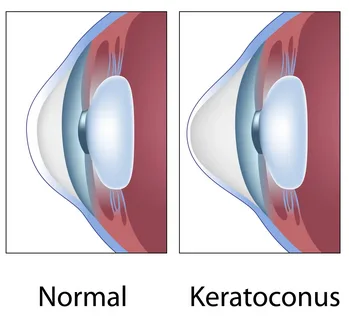
Keratoconus is an eye condition in which the cornea the clear front surface of the eye becomes thin and gradually bulges outward into a cone-like shape. This irregular shape prevents light from focusing properly on the retina, leading to blurred or distorted vision. Keratoconus usually begins during the teenage years or early adulthood and may progress slowly over time if not monitored.

What Causes Keratoconus?

The exact cause of keratoconus is not fully known, but research shows that multiple factors may contribute to the development of the condition.

Genetic Factors

Keratoconus may run in families due to inherited corneal weakness.

Eye Rubbing

Frequent eye rubbing can weaken the cornea and worsen keratoconus.

Weak Corneal Tissue

Some people naturally have weaker corneal tissue prone to thinning.

Environmental Factors

Allergies, dust, and irritation may increase stress on the cornea.

Stages of Keratoconus

Stage

Corneal Changes

Vision Symptoms

Early Stage

Slight thinning and mild irregular shape

Mild blur, frequent glasses change

Moderate Stage

Increased thinning and irregular curvature

Distorted vision and astigmatism

Advanced Stage

Significant thinning and cone formation

Severe blur and glare sensitivity

Severe Stage

Extreme thinning or corneal scarring

Very poor vision

Common Symptoms of Keratoconus

Symptom

Description

Blurred Vision

Vision becomes unclear or distorted

Frequent Prescription Changes

Glasses power changes often

Light Sensitivity

Discomfort in bright light

Night Vision Difficulty

Trouble seeing clearly at night

Eye Strain

Tired or uncomfortable eyes

Causes of Keratoconus

Cause

Description

Risk Level

Genetic Factors

Condition may run in families

Moderate

Eye Rubbing

Repeated rubbing weakens the cornea

High

Weak Corneal Tissue

Naturally thinner or weaker cornea

Moderate

Environmental Factors

Allergies, dust, and irritation

Moderate

Keratoconus Diagnostic Tests

Test Name

Purpose

What It Measures

Eye Examination

Detect vision problems

Visual acuity

Corneal Topography

Map cornea shape

Corneal curvature

Pachymetry

Measure corneal thickness

Corneal thickness

Refraction Test

Determine glasses power

Vision clarity

Types of Keratoconus (Corneal Shapes)

Type

Description

Treatment Complexity

Nipple Cone

Small, steep cone near the center

Easier to manage

Oval Cone

Larger cone located below center

Moderate complexity

Globus Cone

Large cone covering most of cornea

More complex management

Contacts